Broker Deal Tracker vs. CRM: What Real Estate Brokers Need for Live Deals
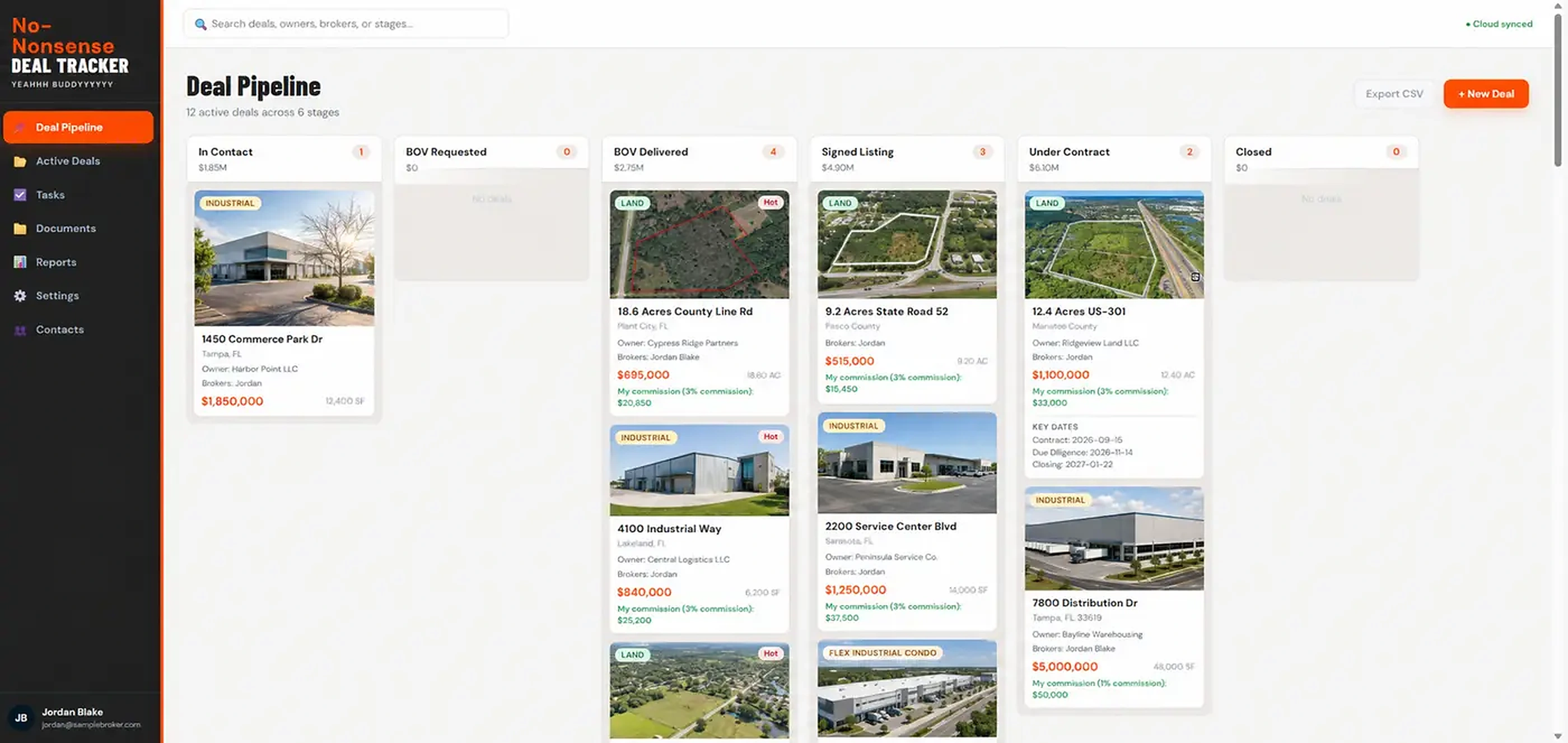
A CRM and a broker deal tracker solve different problems. A CRM is usually built to preserve relationships, company records, and prospecting activity. A deal tracker is built to help a broker move a smaller number of active assignments. Trying to force one screen to do both jobs often creates a database that knows everything except what you should do next.
What a CRM is good at
A CRM can hold thousands of contacts, companies, calls, campaigns, and long-term relationship notes. It helps a firm preserve institutional history and report activity across a team. That is useful. It is also broader than the daily work required to price, pitch, list, contract, and close one property.
What a broker deal tracker is good at
A broker deal tracker starts with the assignment. It keeps the stage, latest event, next action, property facts, key dates, files, email history, and fee together. When an owner calls from the road, the record should tell you what was promised and what is due next.
Why brokers stop updating oversized systems
The problem is rarely resistance to technology. The system often asks for too much information before it gives anything useful back. If updating one deal means opening separate contact, opportunity, task, document, and reporting screens, the broker will wait. The notes end up in email, a legal pad, or memory.
Use both with clear boundaries
Keep the company CRM current for required contacts, activities, and reporting. Use the deal tracker for the active work you personally need to execute. Do not copy every field between systems. Decide which system owns each kind of information and keep the overlap small.
Judge the tool by retrieval speed
Open a live deal and time how long it takes to answer: current stage, last conversation, next task, nearest deadline, and expected fee. If that takes more than a minute, the setup is not serving the broker. More fields will not fix the problem.
Practical takeaways
- Let the CRM preserve the broad relationship history.
- Let the deal tracker run active assignments.
- Avoid duplicate entry that does not change a decision.
- Measure success by how quickly you can answer the client.